News · Technology
Google Play Wants Better Foldable Apps, With New Requirements in 2027
Google has announced adaptive quality standards for foldables. Baseline support and new screenshots arrive in April 2027, while older un-updated apps remain downloadable.
Event date: 2026-11-18
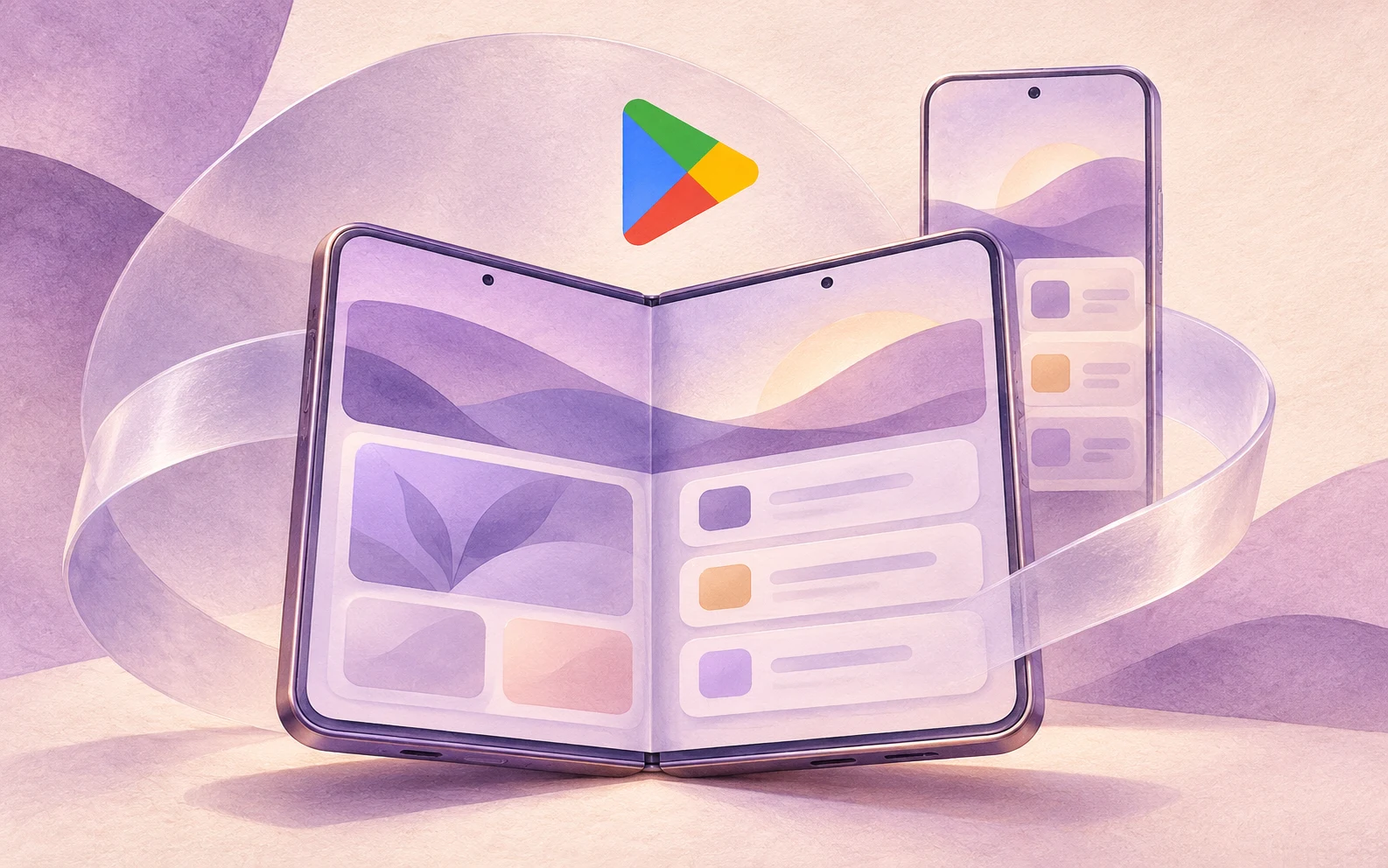
You unfold a phone, but the app still occupies a narrow strip with black bars beside it. Or unfinished text disappears when the device folds. Those are the kinds of experiences Google wants to address with new adaptive app quality standards on Google Play.
Announced on November 18, 2026, the changes give developers a clearer timeline for foldable support. Some preparation can start now, but the main requirements arrive in 2027. They do not mean every app will suddenly gain a new layout today.
What should an app be able to do?
The baseline, Tier 3 or Adaptive ready, requires an app to use its available screen or window area without letterboxing or compatibility mode. It must retain or restore user state when the device rotates, folds or unfolds, or when its window is resized.
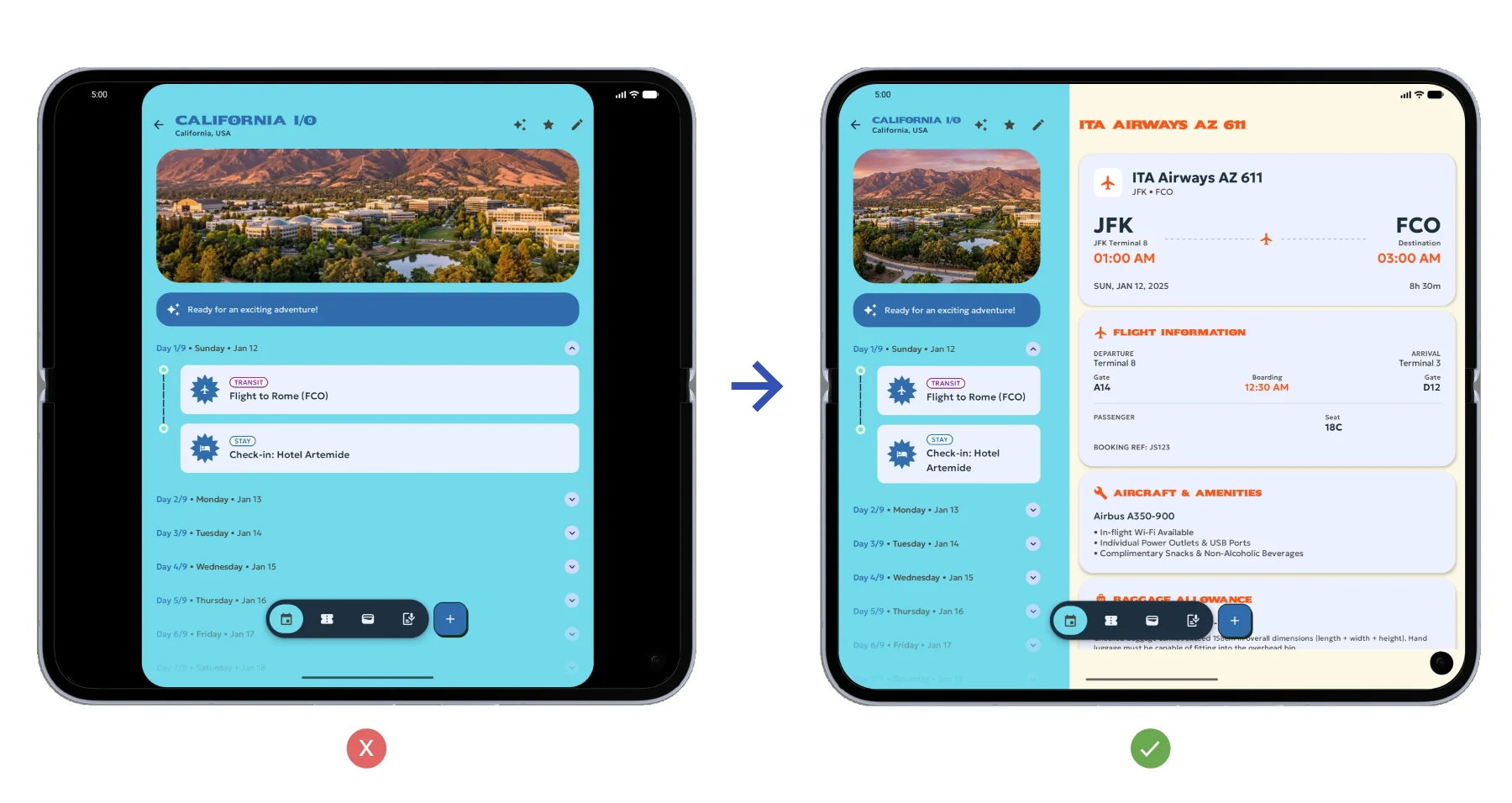
The examples are practical: keep the reader’s scroll position, preserve entered text and resume media from where playback stopped. Apps should also function in multi-window mode and support basic keyboard, mouse or trackpad interactions under the guidelines.
Not every app needs two panes immediately
Tier 3 is the foundation for stable, usable core flows. Google distinguishes it from Tier 2, which optimizes responsive layouts such as multiple panes, and Tier 1, which supports more specialized experiences, including partially folded device postures.
Meeting the baseline is not simply a matter of enlarging every button. Equally, it does not mean every app must immediately introduce two columns or elaborate folding features. Higher quality tiers have their own expectations.
When do the Google Play changes take effect?
| Timing | Change announced by Google |
|---|---|
| November 2026 | Foldable screenshots can be uploaded in Play Console, with listing visibility rolling out over the following weeks |
| April 2027 | New apps and updates need dedicated foldable screenshots; baseline Tier 3 support takes effect for standard applications |
| August 2027 | New and updated apps must target API level 37, or Android 17 |
For store listings, the announcement calls for three foldable screenshots in addition to two standard phone screenshots. The documentation details 1:1 and 4:3 inner screens and a 10:16 portrait outer screen. Captures can come from physical devices or Android Emulator.
What happens to existing apps?
Google explicitly says existing, un-updated apps will remain downloadable after the April deadline. This is not an announcement that all older apps will be removed from the Play Store. The requirements focus on new submissions and updates.
For users, the intended benefit is a smoother transition between screen states as developers adapt their apps. Developers can start by testing folding, unfolding, rotation, resizing and input continuity before preparing screenshots. A polished store image should reflect an experience that actually works inside the app.
Sources & references
- Google: New adaptive quality standards on Google Play (18 November 2026) ↗developer.android.com
- Android Developers: Tier 3 — Adaptive ready ↗developer.android.com
- Android Developers: Capture app screenshots for Google Play ↗developer.android.com
- Android Developers: Content license and attribution ↗developer.android.com